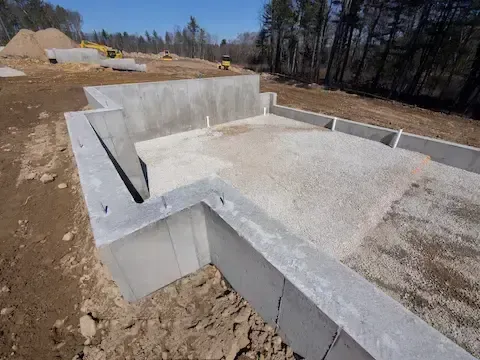
Summer Concrete Foundation Pouring Guide Oregon City
Pouring a concrete foundation in Oregon City during summer requires timing pours for early morning, selecting admixtures suited to the Pacific Northwest's humidity swings, and protecting fresh concrete from Oregon's summer heat and afternoon sun. The Willamette Valley's warm, dry summers can cause rapid moisture loss and surface cracking if you skip proper curing steps. Start before 7 a.m. when possible, use a retarding admixture for extended workability, and keep curing blankets or wet burlap on hand. Whether you're working near the Clackamas River bluff or on a hillside lot, these steps apply directly to Oregon City conditions.
Step 1: Check Oregon City Weather Windows Before Scheduling Your Pour
Oregon City summers run warm and increasingly dry from July through September, but morning marine layer and occasional afternoon thunderstorms can disrupt a pour. Check the National Weather Service forecast for Oregon City, OR at least 72 hours out. Avoid scheduling when temperatures are expected to exceed 90°F at midday or when wind speeds will accelerate surface evaporation. The ideal window is a stable forecast with morning lows in the mid-50s and highs below 85°F. Local concrete suppliers on Molalla Avenue can often pull recent batch plant records to help you gauge mix performance under similar recent conditions.
Step 2: Select the Right Admixtures for PNW Summer Conditions
Standard residential mix designs don't account for Oregon's summer evaporation rates. For a summer foundation pour in Oregon City, ask your batch plant for a mid-range water reducer combined with a Type B or Type D retarding admixture. This extends your working time from the typical 60–90 minutes to closer to 120 minutes, which matters when you're pouring a full perimeter foundation on a sloped Clackamas County lot. Avoid adding water at the job site to extend workability — this weakens the mix and increases shrinkage cracking. If you're pouring a thicker section, a Type F high-range water reducer can give you workability without sacrificing compressive strength.
Step 3: Prepare the Subgrade and Forms Before Concrete Arrives
In Oregon City's summer heat, subgrade preparation is time-sensitive. Dry, absorptive soil will pull moisture out of your mix the moment it contacts the ground, accelerating set time unpredictably. Wet down your subgrade thoroughly the evening before the pour and again lightly about an hour before the truck arrives. Check that your forms are tight — Oregon City lots near the historic downtown bluff often have clay-heavy fill soils that shift, which can compromise form alignment overnight. For foundation repair and new foundation projects alike, proper subgrade moisture is one of the most overlooked variables in summer pours.
Step 4: Schedule the Pour for Early Morning Delivery
Request your first truck no later than 6:30 a.m. if your pour requires multiple loads. Concrete batch plants serving the Oregon City area, including those running routes along Highway 213, typically begin early deliveries in summer to accommodate contractors working ahead of midday heat. Staging your crew the night before and having all tools pre-positioned means you can begin consolidation immediately. Each truck that sits waiting during a summer pour costs you workability. Communicate your pour sequence clearly to the driver — for a perimeter foundation, work systematically around the form rather than dumping and moving randomly.
Step 5: Consolidate and Finish Efficiently
Use an internal vibrator at 18–24 inch insertion intervals to consolidate the mix thoroughly without over-vibrating. In summer heat, surface water can evaporate faster than bleed water rises, which creates a false finishing window. Do not begin floating or troweling until bleed water has fully dissipated from the surface — premature finishing traps bleed water below the surface layer and causes delamination. For Oregon City foundation work, a broom finish on exposed footing ledges or a standard float finish on slab areas is typical. Keep your finishing crew moving steadily and have a second person applying a spray-on evaporation retarder like Confilm ahead of the finishers on hot, breezy days.
Step 6: Begin Curing Immediately After Finishing
Curing is where summer foundation pours fail most often in the Pacific Northwest. Contractors used to Oregon's wet winters sometimes underestimate how quickly July and August afternoons dry out fresh concrete in the Willamette Valley. Apply a curing compound immediately after finishing, or cover the slab with wet burlap topped by polyethylene sheeting. For foundation walls, strip forms only after 24 hours minimum and then coat exposed surfaces with curing compound or keep them wet with soaker hoses for at least seven days. Oregon City's summer UV exposure accelerates surface drying — shade cloth over exposed walls is worth the setup time. You can also review local concrete slab expertise for additional guidance on curing approaches used in this region.
Step 7: Protect the Pour Through the First 72 Hours
The first 72 hours are critical for achieving design compressive strength. Keep foot traffic and any load off the slab for at least 24 hours, and off the foundation walls for 48 hours. If temperatures drop overnight — which still happens in Oregon City even in July — use insulating blankets over footing edges to prevent thermal cracking. Document your pour time, ambient temperature, mix ticket information, and any admixtures used. This record matters if you need to pull a permit inspection with Clackamas County or coordinate with a structural engineer on a phased foundation build. A well-documented summer pour also protects you if questions arise later about strength or curing adequacy.