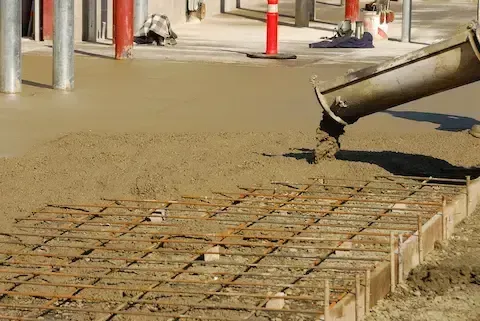
Summer Commercial Concrete Pours Oregon City Guide
Oregon City summers bring reliable dry windows that look perfect for pouring slabs, curbs, and flatwork—but the Willamette Valley's heat, low humidity, and afternoon wind can turn a textbook pour into a cracked, bleed-water nightmare if you're not prepared. Commercial projects carry tighter tolerances than residential work: structural slabs, loading dock aprons, and ADA-compliant flatwork all have specifications that summer heat can compromise fast. Understanding the seasonal variables specific to Oregon City, OR helps you schedule smarter, protect your investment, and avoid expensive rework.
Why Summer Timing Matters for Commercial Concrete in Oregon City
The Clackamas County area sees average July and August highs in the low-to-mid 80s°F, with occasional heat events pushing temperatures past 95°F. For concrete, ambient temperature above 90°F accelerates hydration dramatically. Water evaporates from the surface faster than the cement matrix can properly hydrate, which reduces compressive strength, increases shrinkage cracking risk, and shortens the finishing window. On a commercial pour—think a 5,000-square-foot warehouse apron or a municipal sidewalk replacement along Main Street—losing even 20 minutes of workable time ripples across your entire finishing crew. Planning your summer commercial concrete pour around Oregon City's specific climate patterns isn't optional; it's how you hit spec.
Optimal Pour Windows During Oregon City Summers
The single most effective strategy for hot-weather commercial pours in the Oregon City area is shifting the work to early morning. Target a concrete placement start between 5:00 a.m. and 7:00 a.m., when ambient temperatures are at their lowest and direct solar radiation hasn't yet loaded the substrate. Concrete placed in the first hours after sunrise benefits from cooler air temperatures, reduced evaporation rates, and a longer window before the afternoon sun raises surface temperature significantly.
Concrete temperature at the point of placement should be kept below 90°F per ACI 305R hot-weather concreting guidelines. In practical terms for Oregon City projects, that means coordinating with your ready-mix supplier to chill mix water or substitute ice for a portion of the mix water on days forecast above 85°F. Pre-wetting subgrade and forms the evening before reduces heat absorbed overnight. If your project involves concrete with a specified water-to-cement ratio below 0.45—common in commercial structural applications—any additional evaporation loss before finishing compromises the w/c ratio at the surface layer, which is exactly where durability matters most.
Avoid scheduling large flatwork pours during mid-day windows from June through September unless the project has shade structures in place or your crew is using an evaporation retarder as a standard part of the finishing sequence.
Right-of-Way Permit Scheduling in Oregon City
Commercial concrete work in Oregon City that touches public sidewalks, curb and gutter, driveway approaches, or any pavement within the public right-of-way requires a Right-of-Way (ROW) permit through the City of Oregon City Public Works department. During summer construction season, permit lead times extend significantly—other contractors are pulling permits for the same dry-weather window, and inspection scheduling can add days to your timeline.
Plan to submit ROW permit applications at least three to four weeks before your target pour date during June through August. Applications require a traffic control plan for projects that affect travel lanes or pedestrian paths on streets like Molalla Avenue, McLoughlin Boulevard, or the downtown historic district streets where pedestrian flow is a serious consideration. Inspections for curb work and ADA curb ramp replacements are required before concrete placement in many cases, which means your pour window depends on inspector availability—not just your crew's schedule.
For commercial concrete projects that fall partially within the ROW and partially on private property, the permit requirement still applies to the public-facing portion. Confirm the property line and right-of-way boundary with the city or your project engineer before submitting.
Hot-Weather Curing Protocols for Commercial Flatwork
Curing is where summer commercial pours either succeed or fail. ACI 308 requires a minimum seven-day moist cure for concrete placed in ambient temperatures above 70°F to achieve design strength. In Oregon City summer conditions, passive curing—simply leaving a slab to cure uncovered—results in surface drying that reduces strength by as much as 30% in the top inch of the slab. That top inch is the wear surface on any commercial flatwork, and it's the layer that takes forklift traffic, loaded pallet jacks, and delivery vehicles.
Effective hot-weather curing options for commercial projects include:
- Curing compounds: A white-pigmented, light-reflective curing compound applied immediately after final finishing reduces evaporation and reflects solar radiation. Specify a compound that meets ASTM C309 Type 2, Class B for projects where a bonded overlay or coating will be applied later, as some compounds interfere with adhesion.
- Wet burlap and polyethylene: Covering finished slabs with pre-wetted burlap and then sealing with poly sheeting maintains surface moisture. This method requires daily re-wetting and is labor-intensive on large commercial pours but produces excellent results.
- Curing blankets: Insulating curing blankets are more commonly associated with cold-weather work, but on extremely hot days they can buffer surface temperature swings when layered over burlap.
Wind is an underappreciated factor along the Willamette River corridor near Oregon City. Even a 10 mph breeze on a dry summer day can push evaporation rates past 0.20 lb/ft²/hr—the threshold at which plastic shrinkage cracking becomes likely. Check the evaporation rate nomograph before every summer pour and adjust your plan if wind is forecast.
Coordination with Suppliers and Subcontractors
Oregon City's proximity to the Portland metro area means ready-mix suppliers serving local commercial contractors are also managing high-volume summer demand across the region. Secure your concrete delivery time slots well in advance—at minimum two weeks for standard mixes and four weeks if you need specialty admixtures like retarders, extended set mixes, or supplementary cementitious materials like fly ash to manage heat. Retarders are especially valuable for summer commercial pours because they extend the initial set time, giving finishing crews more working time without compromising final strength.
Coordinate your electrical, plumbing, and mechanical subcontractors to complete all embedded work before the pour date is locked in. Rescheduling a concrete pour in summer, especially one that requires a ROW permit and morning placement, can push your project back weeks if trades aren't ready when the window opens.
Practical Considerations for Large Commercial Slabs
For large-format commercial pours—warehouse floors, commercial parking lots, loading areas—consider breaking the work into smaller placements that can each be completed within the early morning cool window. A 15,000-square-foot parking lot pour attempted in a single day during August is a high-risk project; three placements over three mornings is a much more controlled approach that gives each section adequate curing time before traffic loading resumes. Review the commercial concrete services overview to understand the full scope of planning support available for projects in the Oregon City area.
Summer commercial concrete in Oregon City is achievable at high quality when timing, permitting, mix design, and curing are all treated as interconnected variables rather than independent checkboxes. Start early, plan permits ahead of the summer rush, and build your curing protocol before the truck rolls.